From robotaxis to drug discovery, Alphabet is building far more than a search engine
Most people know Alphabet as the company that owns Google and YouTube. But behind that familiar brand is a portfolio of projects that stretches well beyond search ads and video streaming. Some are already paying off. Others are still years from profitability. All of them signal where one of the world’s most powerful companies thinks the future is heading.
Here’s a clear look at Alphabet’s biggest moves beyond its core business, what they are, how far along they are, and why they matter.
1. Waymo: Robotaxis Are No Longer a Concept
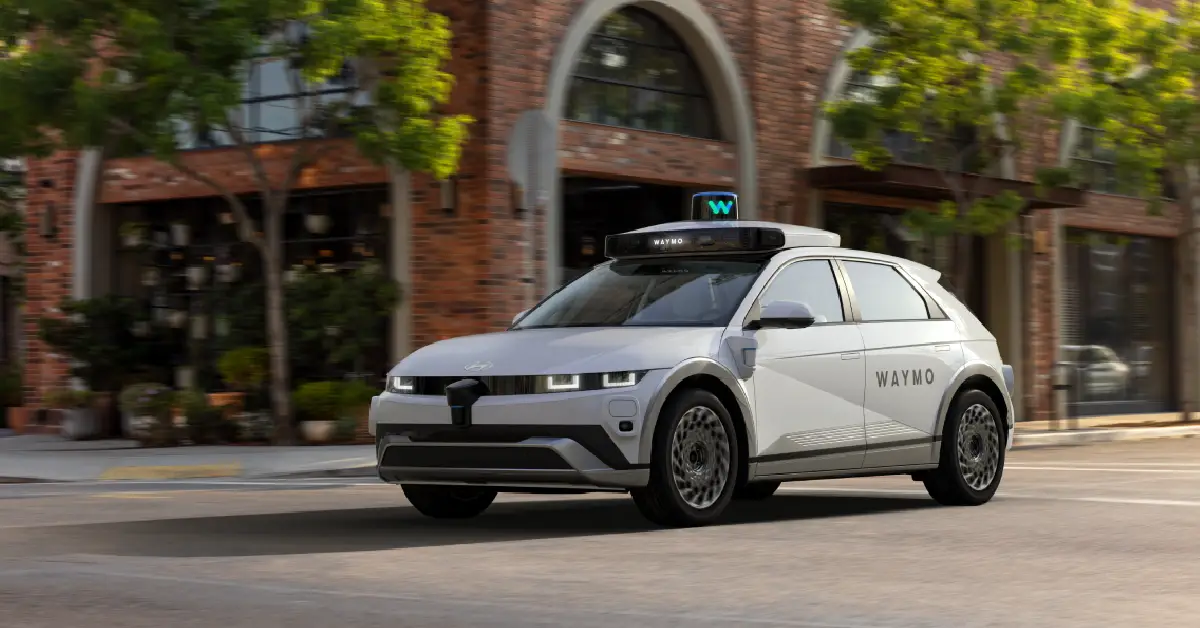
Waymo is Alphabet’s autonomous vehicle company, and it has crossed a threshold that most of its competitors haven’t reached yet. It’s running a real, paid, driverless ride-hailing service at scale.
As of March 2026, Waymo has 3,000 robotaxis in service, provides 500,000 paid rides per week, and drives 4 million rider-only miles every week. The service operates across multiple U.S. cities including San Francisco, Phoenix, Los Angeles, and Austin, with operations beginning in Atlanta and Miami.
The financial picture is accelerating too. Waymo hit approximately $355 million in annualized revenue in February 2026, up from $125 million at the end of 2024. In that same month, Waymo closed a $16 billion funding round at a post-money valuation of $126 billion, with Alphabet funding the majority of capital. The company tripled its annual ride volume in 2025 alone, surpassing 20 million lifetime rides.
Waymo has also confirmed international expansion plans. The company is laying groundwork for ride-hailing operations in over 20 additional cities in 2026, including Tokyo and London. Alphabet’s CFO has stated that Waymo is expected to “meaningfully” contribute to Alphabet’s financials by 2027.
2. Google Cloud: From Side Project to Profit Engine
Google Cloud is no longer a supporting act. It’s one of the fastest-growing enterprise businesses in the world and a critical piece of Alphabet’s long-term strategy.
Alphabet reported 48% revenue growth year-over-year for Google Cloud in Q4 2025, the fastest growth rate among the three major cloud providers. The division posted $17.66 billion in a single quarter, with cloud operating margins expanding to 30%.
Alphabet is spending between $175 billion and $185 billion on capital expenditures in 2026, mostly on servers, data centers, and networking. Google Cloud’s order backlog surged 55% quarter-over-quarter, signaling sustained enterprise demand that currently outpaces supply. This isn’t a growth story anymore. It’s a capacity story.
3. Google DeepMind: The AI Research Arm Changing Science
DeepMind is Alphabet’s dedicated AI research lab, and its most significant work has moved well beyond tech benchmarks into actual scientific impact.
AlphaFold, DeepMind’s AI system that predicts the 3D structure of proteins, earned its creators the 2024 Nobel Prize in Chemistry and has since been used by over 3 million researchers in more than 190 countries. It has been applied to research on malaria vaccines, Parkinson’s disease, antimicrobial resistance, and drug discovery. That’s not a technology story. That’s a public health story.
DeepMind also launched Isomorphic Labs, a spinoff using AI to design drugs. By early 2026, Isomorphic had expanded its partnership with Novartis to six drug targets, raised $600 million in external funding, and released a Drug Design Engine that surpassed AlphaFold 3’s capabilities. Its first AI-designed molecules are targeting Phase I clinical trials by late 2026.
In 2025, DeepMind’s Gemini 3 model topped major AI benchmarks for reasoning and multimodal understanding. DeepMind’s Deep Think mode achieved gold-medal-standard performance in two international mathematics competitions, an unprecedented milestone for an AI system.
4. Gemini and the AI Consumer Platform
Gemini is Alphabet’s flagship AI model and the product that ties much of its consumer AI strategy together. It’s not just a chatbot. It’s embedded across Search, Gmail, Google Maps, YouTube, Google Classroom, and the Gemini app itself.
The Gemini app surpassed 750 million monthly active users by the end of Q4 2025, up from approximately 450 million at the start of the year. Enterprise adoption is accelerating too, with 27 million enterprise users on Gemini Pro as of mid-2025 and healthcare and finance leading sector adoption at 3.4 times year-over-year growth.
Google also reported that Gemini’s serving unit costs dropped 78% in 2025 through model optimization alone. That efficiency gain matters because it directly reduces the cost of running AI at consumer scale, making it feasible to offer Gemini-powered features broadly and at lower prices.
5. Wing: Drone Delivery Goes Mainstream
Wing is Alphabet’s drone delivery company, and it’s scaling faster than most people realize. The question of whether drone delivery is viable has been answered. The current question is how quickly it can reach the rest of the country.
Alphabet-owned Wing is expanding its drone delivery service to an additional 150 Walmart stores across the U.S. in 2026, with the expansion expected to reach more than 40 million Americans, or about 12% of the U.S. population. Service is expanding from its Dallas-Fort Worth and Atlanta base to Los Angeles, Miami, St. Louis, and Cincinnati, with more markets to follow.
Wing’s top 25% of customers are already using the service three times a week, which suggests strong repeat usage rather than novelty-driven one-time orders. Wing drones can fly up to 60 miles per hour, travel 12 miles round trip, and carry items up to five pounds, covering groceries, over-the-counter medicine, and household essentials.
6. Verily: Precision Health and AI-Powered Medicine
Verily, formerly known as Google Life Sciences, is Alphabet’s healthcare bet. Its focus has shifted significantly over the past year. In August 2025, Verily shut down its medical device division to concentrate entirely on AI-powered healthcare platforms.
The company now positions itself as a platform provider for healthcare organizations building AI tools. It has partnered with NVIDIA to accelerate precision health AI initiatives and plans to reintroduce its Lightpath health management app in 2026, featuring AI-powered coaching for chronic conditions. Verily has raised $2.5 billion in total funding and operates in a crowded field, but its access to Google’s AI stack gives it advantages that most competitors can’t replicate from scratch.
7. Google Quantum Computing: The Willow Chip
Alphabet’s quantum computing work is still in the research phase, but it recently cleared a milestone that shifted expert timelines significantly.
In October 2025, Google ran its Quantum Echoes algorithm on its Willow chip 13,000 times faster than the world’s best classical supercomputer, a verifiable result published in the journal Nature. Verifiability is the key word. Previous quantum performance claims were hard to independently confirm. This one can be repeated.
The Willow chip also performed a benchmark computation in under five minutes that would take a classical supercomputer 10 septillion years. Google’s leadership has suggested commercially relevant quantum computing could arrive within five years, significantly sooner than previous estimates. Real-world applications in drug discovery, materials science, and climate modeling are the targets.
8. Android and the Mobile Ecosystem
It’s easy to overlook Android because it’s been around so long, but it remains one of Alphabet’s most strategically important assets. Android powers over 85% of smartphones in key emerging markets like India, Indonesia, Nigeria, and Brazil, meaning the next billion internet users will largely come online through Google’s operating system.
In 2025, Google integrated Gemini directly into Android at the OS level, making AI assistance a default feature rather than an add-on. That integration gives Alphabet a distribution advantage that’s built into the hardware billions of people already carry. Android also connects to Google Play, Google Maps, Google Pay, and the broader suite of services, creating a full consumer ecosystem that starts at the phone and expands outward.
9. YouTube: Still Growing, and Becoming Television
YouTube is technically part of Google Services rather than a moonshot, but its trajectory deserves a separate look. It’s no longer just a video platform. It’s becoming the primary television experience for a growing share of Americans.
YouTube has held the number one position in U.S. streaming watch time for nearly three years according to Nielsen. YouTube has over 100 million paid subscribers across YouTube Premium and YouTube Music, with advertising revenue reaching $9.8 billion in Q2 2025, up 13% year over year. Shorts averages 200 billion daily views. YouTube TV is expanding with more than 10 specialized genre-based subscription plans and fully customizable multi-view for connected TV screens.
CEO Neal Mohan has positioned creators as “the new stars and studios,” and the numbers support that framing. YouTube has paid more than $100 billion to creators, artists, and media companies over the past four years, making it one of the largest creator economies in the world.
10. Calico and the Longevity Bet
Calico is Alphabet’s longest-term and least-discussed bet. It’s a biotech company with a single audacious goal: understanding why people age and finding ways to extend healthy human lifespan. That’s not a product roadmap. That’s a scientific mission measured in decades.
Calico operates more like a research institute than a traditional company, combining drug development with academic-style biology research. It has produced drug candidates that have progressed to clinical trials, but commercial output remains limited by design. The bet here isn’t about near-term revenue. It’s about whether biological aging can eventually be treated like a disease, and Alphabet is willing to fund decades of work to find out.
The Bigger Picture: One Company, Many Futures
What ties all of these projects together isn’t just Alphabet’s money. It’s the underlying infrastructure. As of 2026, Alphabet became the first digital advertising company to surpass $400 billion in annual revenue, giving it a financial foundation few companies can match. That cash flow funds Waymo’s vehicle fleet, DeepMind’s compute, Wing’s logistics network, and Calico’s research simultaneously, without needing any of them to turn a profit this quarter.
Alphabet isn’t placing one big bet on the future. It’s placing ten. Some will fail. Some will be sold or shut down. But if even two or three of these projects reach the scale of Google Search or YouTube, Alphabet’s next decade could look very different from its last one. And given that Waymo is already running half a million rides per week, DeepMind’s drugs are entering clinical trials, and Wing is delivering groceries to 40 million Americans, the future Alphabet is building isn’t entirely hypothetical anymore.
It’s already here in pieces. The only question is which piece gets there first.

One thought on “Alphabet’s 10 Biggest Bets: What’s Next After Google and YouTube?”